Yesterday, Senators Reverend Warnock (D-GA) and Katie Britt (R-AL) introduced the bipartisan HBCU Research Capacity Act, legislation that would streamline federal funding opportunities for HBCUs
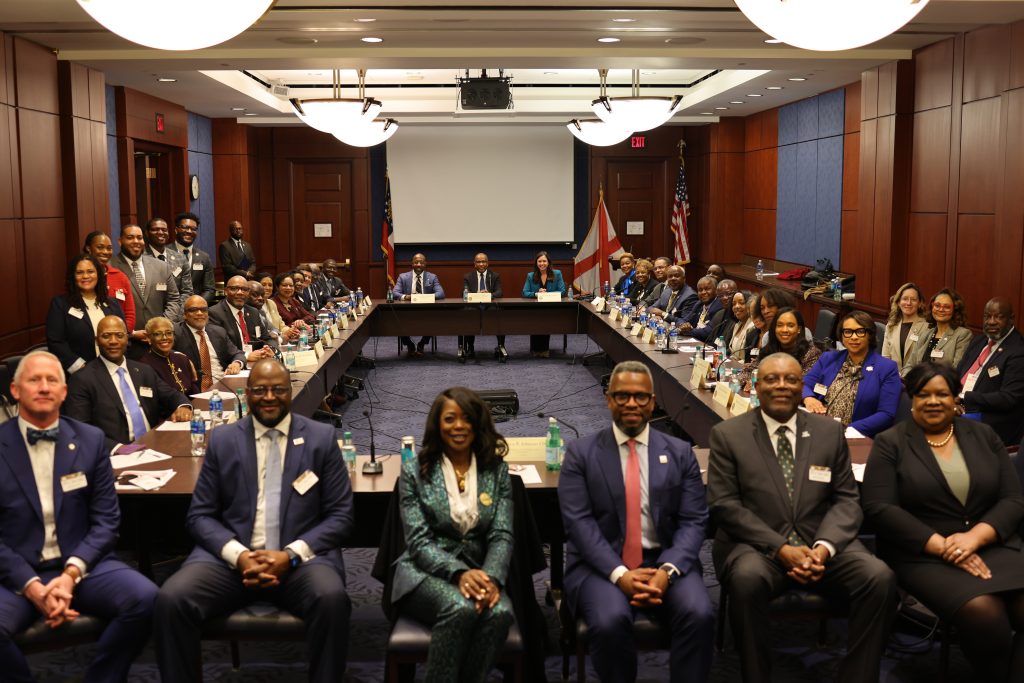
For a roundtable discussion, the senators hosted over 30 HBCU presidents from across the country
Senator Warnock has secured more than $265 million for Georgia’s 10 HBCUs, part of $17 billion in federal investments delivered to HBCUs throughout the nation
Senator Warnock is a proud product of Morehouse College and the only HBCU alum serving in the U.S. Senate
Senator Warnock: “Despite not always having every tool at their disposal, HBCUs continue to make massive contributions to the research and development community. This bipartisan bill will make securing federal dollars for their research efforts that much easier, and I am proud to work alongside another champion of HBCUs in Senator Katie Britt”
Senator Britt: “I’ve seen firsthand how impactful these institutions are – I am a fierce advocate for their funding, not only in Alabama, but also nationwide. I’m proud to co-lead this commonsense legislation with Senator Warnock, which will help these institutions grow their research capacity and continue paving the way for generations of students”
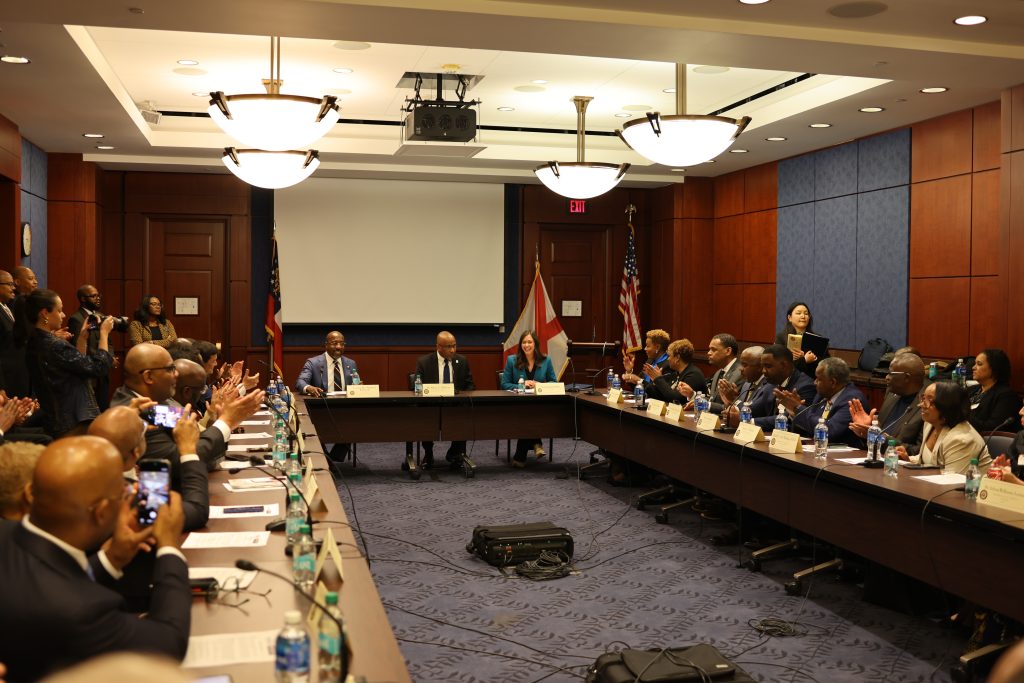
Senators Warnock and Britt during the HBCU president roundtable
Washington, D.C. – Yesterday, Senators Reverend Raphael Warnock (D-GA) and Katie Britt (R-AL) introduced a bipartisan bill that would streamline federal funding opportunities for Historically Black Colleges and Universities (HBCUs). The HBCU Research Capacity Act would set up a federally coordinated website that compiles information about HBCU-eligible STEM research and development funding opportunities.
To announce the bill introduction, the Senators hosted over 30 HBCU presidents from across the country. Georgia HBCUs Fort Valley State was represented by President Paul Jones and Albany State University by President Rober Scott. During the discussion, the presidents addressed the need for legislation like the HBCU Research Capacity Act and continued support at the federal level.
“HBCUs are incubators of diverse excellence and have proven their ability time and again to punch above their weight,” said Senator Reverend Warnock. “Despite not always having every tool at their disposal, they continue to make massive contributions to the research and development community. This bipartisan bill will make securing federal dollars for their research efforts that much easier, and I am proud to work alongside another champion of HBCUs in Senator Katie Britt.”
“It was a privilege to be joined by so many HBCU presidents from across the nation. One of my biggest takeaways from the roundtable was our shared passion for ensuring all HBCUs have the resources available to provide their students with the highest level of opportunity – which I’m committed to continue fighting for,” said Senator Britt. “I am proud to represent the state with the most HBCUs in the nation. As a former trustee to one of Alabama’s 14 HBCUs, I’ve seen firsthand how impactful these institutions are – I am a fierce advocate for their funding, not only in Alabama, but also nationwide. I’m proud to co-lead this commonsense legislation with Senator Warnock, which will help these institutions grow their research capacity and continue paving the way for generations of students.”
This bipartisan legislation, introduced by Senator Reverend Warnock (D-GA) and Senator Katie Britt (R-AL), would establish a federal clearinghouse of all available federal grant opportunities for HBCUs to help them apply for federal funding and best support their missions and students. Specifically, the HBCU Research Capacity Act would amend Title III of the Higher Education Act of 1965 to direct the Secretary of Education to coordinate with federal agencies to create a centralized website listing these grant opportunities. This website would also share best practices for building research capacity, including recommendations from Federal, State, and local organizations. In addition, the bill would require the Secretary of Education to:
- Assign personnel to administer the federal clearinghouse;
- Provide a written notification of the federal clearinghouse to HBCUs and Congress; and,
- Send an annual report regarding the clearinghouse to Congress and a quarterly update to HBCUs upon their consent.
Senator Warnock has long been a champion of America’s HBCUs. In 2023, Senator Reverend Warnock introduced his bipartisan bill, the Increase America’s Research Capacity Act, which instructs the Department of Commerce and Comptroller General of the United States to conduct studies to identify how HBCUs can achieve Research One (R1) status. Following the bill introduction, Howard University announced it had been conferred as an R1 Carnegie Classification, which is widely considered the highest research activity classification among colleges and universities in the United States. Additionally, the Senator successfully secured additional funding to ensure HBCUs and Minority Serving Institutions (MSIs) had additional administrative support to secure federal STEM dollars in the CHIPS and Science Act.
“For too long, federal research investments have been disproportionately concentrated in a select few institutions of higher education,” Dr. Harry L. Williams, Thurgood Marshall College Fund president and CEO, said. “By connecting historically Black colleges and universities with federal research opportunities, the HBCU Research Capacity Act—co-sponsored by Senators Raphael Warnock and Katie Britt—is a major step toward ensuring HBCUs serve as catalysts for expanding America’s portfolio of top-tier research institutions and advancing our nation’s global competitiveness.”
“The UNCF (United Negro College Fund, Inc.) applauds Senators Raphael Warnock (GA) and Katie Britt (AL) for introducing the HBCU Research Capacity Act. Creating a federal clearinghouse to assist HBCUs is a step toward improving access to research funding and breaking down long-standing barriers. At the same time, more must be done to ensure HBCUs—especially those that will never be R1 institutions, yet contribute immeasurably by supplying the prepared students necessary for other HBCUs to become R1s—are fully included in building research capacity. There is no doubt that this bill should be passed, but it can’t be where the work of modernizing the research capacity of HBCUs ends.”
“America’s future depends on our ability to tap into every reservoir of talent available. The HBCU Research Capacity Act is the key to unlocking that potential, transforming institutional capacity into life-changing discoveries. Investing in the research capabilities of HBCUs—and the scholars who lead them—will yield generational dividends. We must ensure that the next George Washington Carver has the tools to thrive in the 21st century. On behalf of the Transnational Association of Christian Colleges and Schools (TRACS), I am proud to enthusiastically endorse this act,” said Timothy W. Eaton, Ph.D., President of the Transnational Association of Christian Colleges and Schools (TRACS).
As the proud product of an HBCU, Senator Warnock is deeply committed to doing all he can to ensure these institutions thrive. To date, Senator Warnock has secured more than $265 million for Georgia HBCUs and more than $17 billion in total for HBCU campuses across the country, and has helped spearhead bipartisan calls for robust funding for HBCUs. In 2023, Senator Warnock addressed HBCU faculty and staff and led the group in prayer at the 7th Annual HBCU Fly-In and outlined his priorities for these important institutions. He has worked to strengthen 1890 land-grant institutions and minority serving institutions
Bill text for the HBCU Research Capacity Act can be viewed HERE.
###